
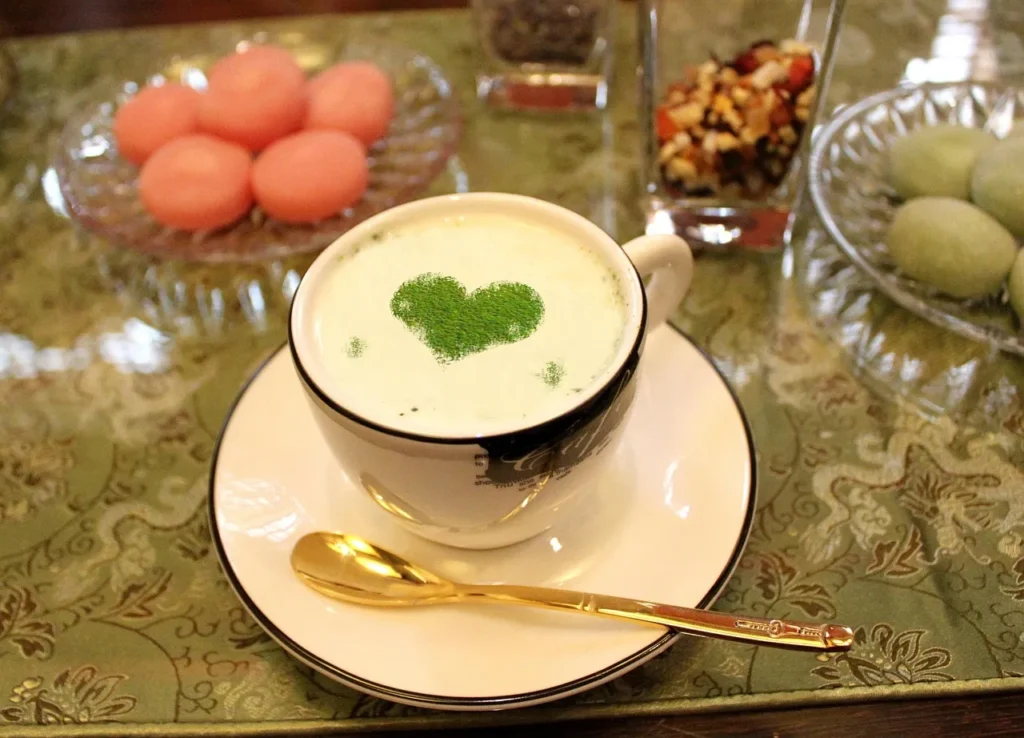
Matcha sounds lighter than a regular latte. The numbers don’t always agree.
Half the people who order it assume there’s no caffeine in the cup at all. Wrong, though it’s an easy mistake – matcha doesn’t announce itself the way a shot of espresso does. The other half assume “green tea” automatically means healthier, lighter, less sugar. That one’s shakier too, and the sugar count is usually the reason why.
So let’s actually look at what’s going on here — the real numbers, what Starbucks is using behind the counter, and the iced version that’s basically taken over everyone’s summer order lately. Or skip the reading entirely and build your exact matcha order in our Starbucks calorie calculator up top.
What Matcha Does Starbucks Actually Use?
Not the ceremonial-grade stuff you’d buy from a specialty tea shop, if that’s what you were picturing. Starbucks blends its own matcha powder in-house, and – this is the part that surprises people – it comes pre-sweetened, sugar mixed in before the powder ever reaches a pitcher.
That single fact explains a lot. People walk in expecting that bitter, grassy taste real Japanese matcha has, then get thrown off by how sweet this version actually is. Here’s the sneaky part — order it ‘no sweetener added’ and assume you’ve dodged the sugar entirely? You haven’t, not really. The sugar’s already baked into the base powder itself. You’re removing an extra pump of syrup, sure, but the core sweetness was never coming from that pump to begin with.
Worth knowing before you order, especially if sugar’s the thing you’re actually trying to track.
Does Starbucks Matcha Have Caffeine?
Short answer: yes. Longer answer: less than coffee, but not nothing – matcha’s still tea at the end of the day, and tea carries caffeine whether people expect it or not.
A Grande Matcha Latte runs close to 80mg of caffeine. Put that next to a Grande Caffe Latte at 150mg, and matcha comes out at roughly half. Noticeably lighter, sure, but still enough to feel if you’re sensitive to it – this isn’t decaf-level caffeine we’re talking about here.
Compare it to something even lighter, like a Refresher, and matcha suddenly looks like the stronger option. Everything’s relative depending on what you’re stacking it against.
Does that caffeine number scale with size the way coffee does? Pretty much. Order a Venti instead of a Tall, and the caffeine climbs right along with the calories — same pattern most tea-based drinks follow on this menu.
Starbucks Matcha Latte Calories By Size & Milk
Size changes the number here the way it does with most drinks. Milk choice, though? That one moves it more than people expect, mostly because matcha powder itself barely carries any calories on its own – almost everything in the final number comes from whatever you’re mixing it with.
A Tall runs about 180 calories with 2% milk. Grande jumps to somewhere near 240 – 32 grams of sugar, 80mg caffeine riding along with it. And a Venti pushes past 320 once everything scales up with the size.
Milk swaps shift things further. Oat milk actually pushes the calorie count up slightly compared to 2% – a pattern we’ve pointed out with other drinks on this menu too, since oat runs heavier than people assume despite its reputation as the “light” plant milk. Almond milk works the opposite way, trimming close to 40 calories off a Grande if that’s the direction you’re trying to go.
One more lever worth pulling – if your store’s standard build includes classic syrup on top of the matcha, ask to skip it. You’ll cut a real chunk of sugar without losing much flavor at all, since the powder’s already doing the sweetening work on its own.
Iced Matcha Latte: How It’s Made (and How to Make One at Home)
Same drink underneath, just served cold. Matcha powder, milk, ice – that’s genuinely most of the recipe, no secret extra step happening behind the counter that you couldn’t replicate at home.
Iced version stays close to the hot one on calories, sometimes a bit lower since ice eats up room milk would’ve taken otherwise. Making one at home isn’t complicated. Spoonful or two of matcha powder, a splash of hot water first – dissolve it into a paste before anything else goes in, or you’ll end up with clumps floating around instead of a smooth cup. Trips people up constantly, that one step. After that, just pour in your milk, dump it over ice, stir. Starbucks isn’t doing anything fancier behind the counter – same steps, just faster.
Iced Banana Bread Matcha: The TikTok Order
Not on the printed menu anywhere, but ask a barista and most of them will know exactly what you mean. It’s built off the standard Iced Matcha Latte, with a pump or two of brown sugar syrup swapped in – sometimes paired with oat milk specifically – meant to echo the flavor of actual banana bread against matcha’s grassy base.
Calorie-wise, it runs noticeably higher than a plain iced matcha. Makes sense once you think about it — you’re stacking brown sugar syrup right on top of a base that’s already pre-sweetened, so the sugar count compounds fast. Fun order to try once, genuinely. Just don’t walk in expecting it to land anywhere near the lighter end of this whole menu.
Full Comparison Table
| Version | Calories (Grande) | Sugar | Caffeine |
| Matcha Latte (2% milk) | 240 | 32g | 80mg |
| Matcha Latte (almond milk) | 200 | 28g | 80mg |
| Matcha Latte (oat milk) | 250 | 33g | 80mg |
| Iced Matcha Latte (2% milk) | 230 | 32g | 80mg |
| Iced Banana Bread Matcha | 280+ | 40g+ | 80mg |
FAQs
Does Starbucks matcha have caffeine?
It does. A Grande Matcha Latte carries about 80mg – roughly half of what you’d get from a coffee-based latte the same size. Not zero, just lighter than what most people are used to.
What matcha does Starbucks use?
Their own house blend, and it comes pre-sweetened before anyone even makes the drink. Sugar’s mixed into the powder itself, which is why it tastes different from plain, unsweetened matcha you’d find somewhere else.
How many calories are in a Starbucks Matcha Latte?
Around 240 for a Grande with 2% milk, carrying close to 32 grams of sugar alongside it. Size shifts that number the most, with milk choice as a close second.
How do you make an iced matcha latte at home?
First, dissolve the matcha powder in a small splash of hot water so it doesn’t clump, then stir in your milk and pour the whole thing over ice — basically the same method used behind the Starbucks counter.
What’s an Iced Banana Bread Matcha?
An off-menu order that pairs iced matcha with brown sugar syrup, sometimes oat milk, built to taste like banana bread. You won’t find it printed anywhere, but most baristas recognize the request immediately.
Why Trust These Numbers
Reviewed by Ryan Cole, Nutrition Content Specialist at calccalorie.
Every figure above traces back to Starbucks’ own published nutrition data. Build your exact matcha order using our calculator and see numbers matched to your real cup.
Last updated: July 2026.